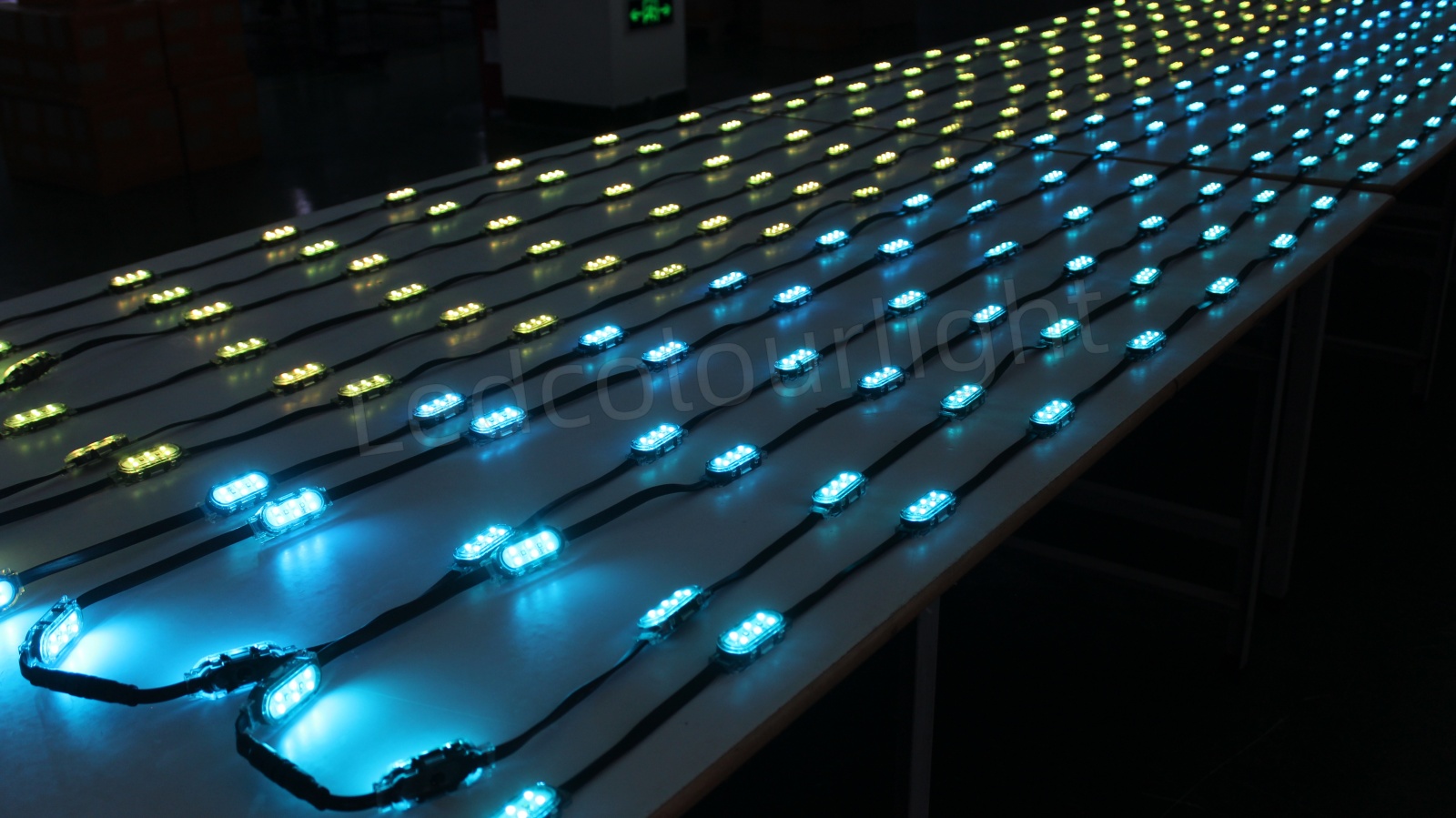
50mm RGB LED String Comparison - Standard vs Steel Wire Design
2025-11-04
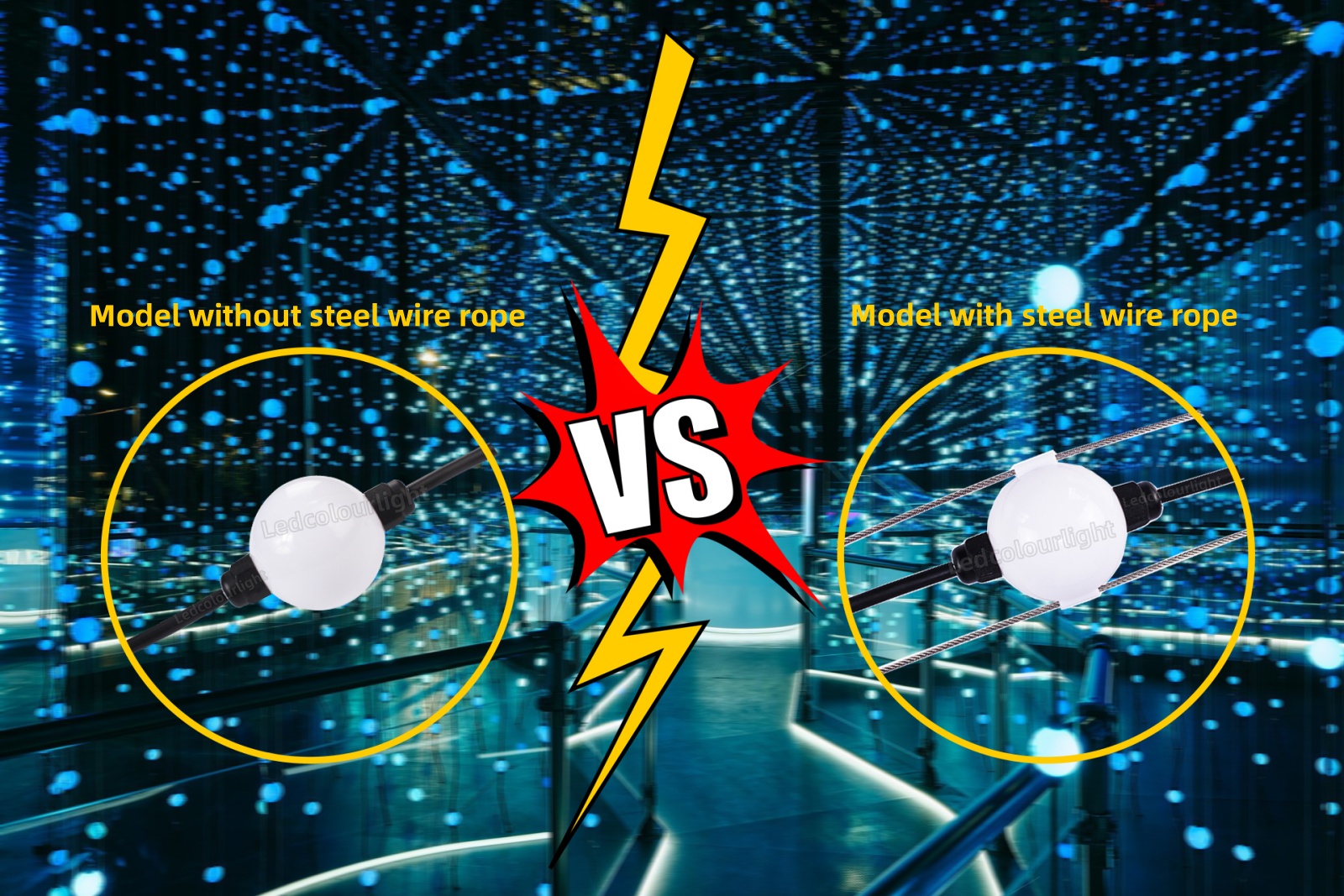
Understanding the Difference Between the 50mm RGB LED String Model with and without Steel Wire
Introduction
In recent years, 50mm RGB LED String Lighting has become one of the most dynamic and creative solutions for architectural facades, landscape installations, and stage productions. Among these, the 50mm LED RGB string stands out for its flexibility, brightness, and ability to create immersive visual experiences. However, when it comes to large-scale outdoor or long-span installations, a variant known as the 50mm LED string RGB with Steel Wire provides enhanced structural support and durability.
Although both models share identical electrical characteristics and visual performance, their physical designs differ significantly. This article explores their similarities and key differences, helping lighting designers and engineers choose the right version for specific project needs.
1. Overview of 50mm RGB LED String Technology
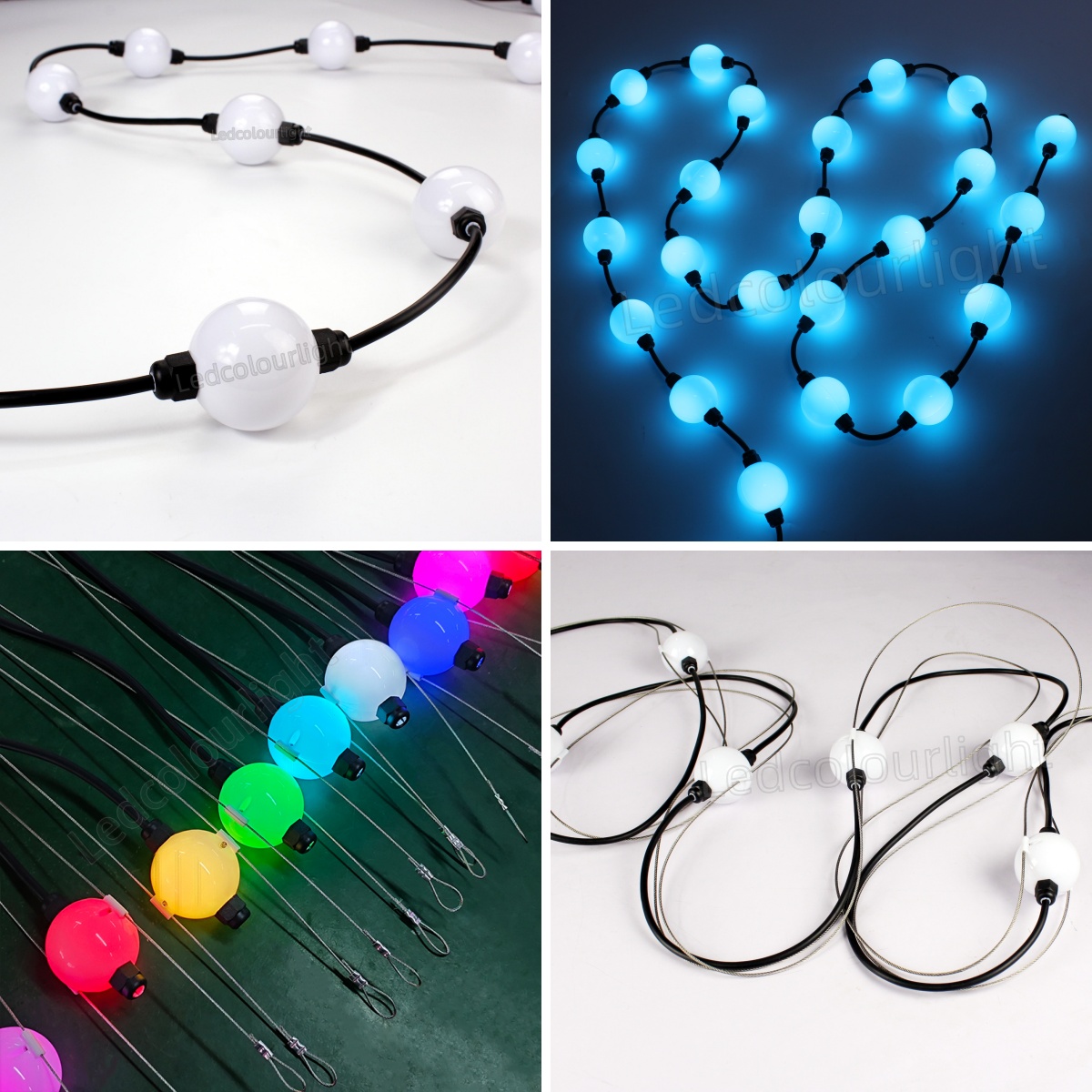
The LED RGB string is an addressable LED lighting fixture, typically composed of spherical diffusers (commonly 50mm in diameter, but 35 mm is also available) connected in series. Each ball contains high-quality RGB LEDs that can display millions of colors through DMX512 or SPI control protocols.
This system allows precise pixel mapping, enabling designers to program complex animations, gradients, and 3D effects across large installations. Whether used for building facades, stage ceilings, or themed environments, these RGB LED strings offer both functional illumination and artistic flexibility.
2. Consistent Electrical and Optical Specifications
Both the standard 50mm RGB LED string and the version with steel wire are designed with identical core specifications:
- Voltage: DC 24V (or 12V customization)
- Control Protocol: DMX512 / SPI / TTL
- LED Type: 6 pieces of High-brightness SMD3535 RGB LEDs
- Power Consumption: Typically 1.44W per ball
- Color Rendering: Full RGB, 16.7 million color combinations
- Protection Level: IP65 or higher for outdoor use
- Beam Angle: 360° omnidirectional diffusion
From an electrical and optical standpoint, both models deliver the same lighting performance — vivid color output, uniform brightness, and smooth transitions.
3. Structural Difference: The Role of the Steel Wire
The most significant distinction lies in the addition of a stainless steel wire on each side of the ball in the enhanced model. While the standard version connects each sphere directly via its power/data cable, the steel-wire version introduces two secondary mechanical support lines that run parallel to the wiring harness.
This structural improvement brings several advantages:
- Enhanced Tensile Strength: The steel wire bears most of the mechanical tension, preventing the electrical cable from stretching or damage.
- Improved Stability: Ideal for long-span installations, such as outdoor ceilings, facades, or suspended grids.
- Neater Alignment: The added wire keeps each pixel ball aligned along a straight axis, maintaining aesthetic uniformity.
- Safety and Durability: Especially valuable for permanent or semi-permanent installations exposed to wind, vibration, or temperature fluctuations.
4. Installation and Maintenance Comparison
| Feature | 50mm RGB LED String | 50mm RGB LED String with Steel Wire |
| Installation Type | Hanging, wrapping | Large-span suspension or fixed installations |
| Support System | Power/data cable only | Stainless steel wire plus power/data cable |
| Structural Strength | Moderate | High tensile stability |
| Maintenance | Easy replacement | Longer service intervals, less frequent maintenance |
| Installation Complexity | Simple | Requires steel wire fixing and tension adjustment |
While the standard model is ideal for flexible or temporary installations — such as indoor displays, event decorations, and tree lighting — the steel wire version excels in demanding environments requiring mechanical stability, such as outdoor facades, large atriums, or city square canopies.
5. Application Scenarios for 50mm LED String RGB
- Standard 50mm RGB LED String
- Retail or commercial interiors
- Shopping mall atriums
- Trees, columns, and decorative arches
- Temporary event lighting or exhibitions
- 50mm LED RGB String with Steel Wire
- Outdoor building facades and curtain walls
- Landscape and architectural lighting
- Urban skylight or canopy installations
- Permanent public art or themed entertainment projects
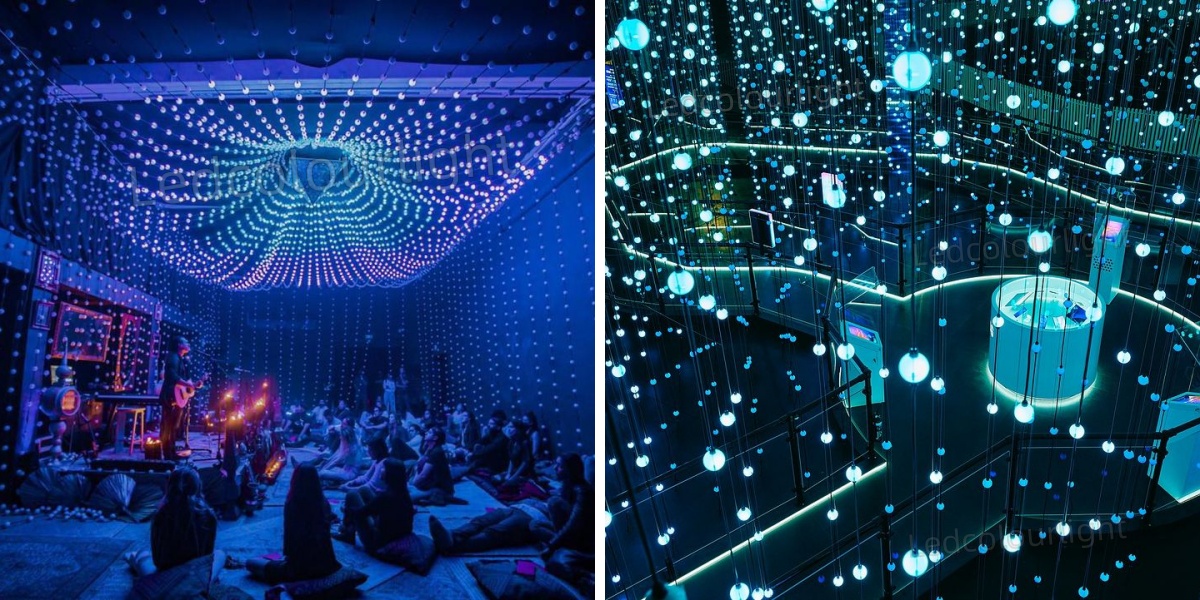
The added support of the steel wire makes the second version particularly suitable for architectural lighting engineers and contractors seeking reliability under challenging environmental conditions.
6. Aesthetic and Functional Benefits
Both models deliver striking 3D lighting effects that can be synchronized with sound or video content. They can transform static architectural forms into dynamic visual canvases. However, the steel-wire design ensures consistent geometry even across long horizontal or vertical spans, resulting in more precise visual alignment — a critical factor for high-end installations or large-scale pixel mapping.
7. Cost Considerations
From a cost perspective, the standard 50mm RGB LED string offers better affordability for smaller projects, pop-up installations, and short-term events. The steel-wire model, while slightly higher in initial cost, provides long-term savings through reduced maintenance, fewer replacements, and improved safety performance — an important advantage for permanent installations or projects with high safety standards.
8. Choosing the Right Version for Your Project
When selecting between the two, consider the following guidelines:
- Span length: For spans over 5–10 meters, the steel-wire version is recommended.
- Installation environment: For outdoor or high-temperature areas, choose the steel-wire version.
- Maintenance frequency: For permanent setups, prioritize the reinforced model.
- Budget and flexibility: For smaller, decorative, or portable designs, the standard version offers optimal cost efficiency.
Ultimately, both versions can be integrated into the same control system, ensuring flexibility for designers who wish to mix both types within one project.
9. Conclusion
The 50mm LED RGB string and its steel-wire variant represent two complementary solutions in modern architectural and entertainment lighting. While they share identical electrical and optical performance, the difference in structural design defines their ideal applications.
For architects, lighting designers, and installation engineers, understanding this distinction ensures better design planning, easier installation, and greater long-term reliability.
If you are planning a new facade illumination, 3D canopy, or stage ceiling project, consider consulting Ledcolourlight's professional team to determine which configuration — with or without steel wire — best fits your structural and aesthetic goals.

High-Performance 40mm LED Diamond Lights with Aluminum Channel System
Custom-designed 50mm DMX Controlled Light Bulbs for Flexible Installation
Related Article
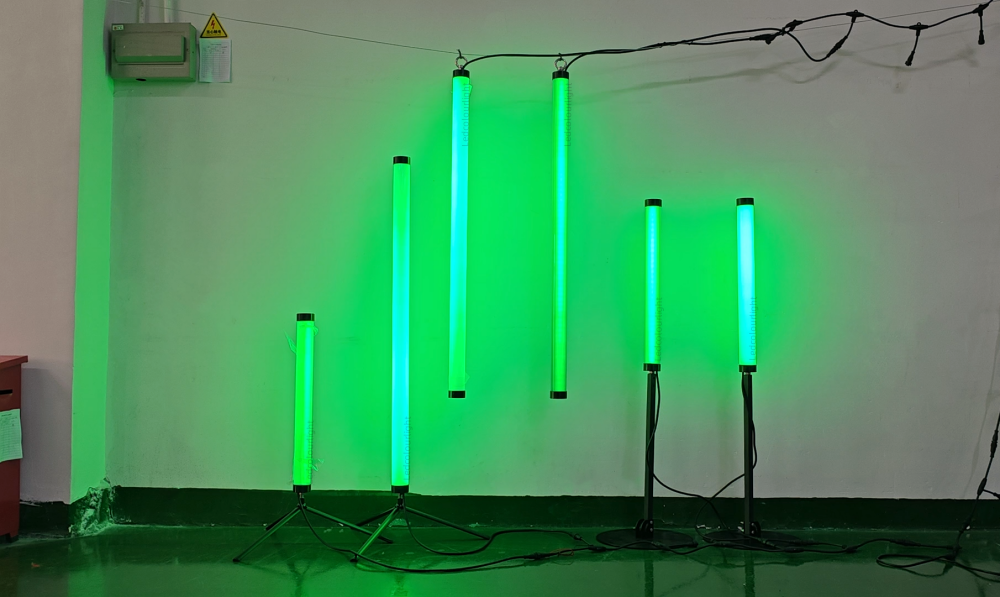
This article explores a versatile 3D LED light tube developed for multi-project use, offering adaptable installation methods and consistent performance for professional lighting environments.
Pixel-controlled 3D LED Light Tube for Professional Lighting Projects