How to Identify High-Quality Pixel LED Lights
2025-09-16
6 Key Factors to Identify High-Quality Pixel LED Lights: A Professional Guide
In recent years, pixel LED lights have become a cornerstone of modern lighting applications. From architectural facades and stage productions to theme parks and immersive exhibitions, these versatile fixtures enable dynamic effects and intricate animations through pixel-level control. However, not all pixel LED products are created equal. The market is filled with options, and discerning the difference between a high-quality solution and a substandard product can be challenging.
To make informed decisions, professionals must evaluate several critical aspects of pixel LED design—from the chip selection to the housing material, waterproof rating, cabling, and overall system reliability. In this article, we will analyze five to six essential factors that determine whether a pixel LED light design is truly built for long-term performance.
To make informed decisions, professionals must evaluate several critical aspects of pixel LED design—from the chip selection to the housing material, waterproof rating, cabling, and overall system reliability. In this article, we will analyze five to six essential factors that determine whether a pixel LED light design is truly built for long-term performance.
1. LED Chip Quality and Configuration: The Heart of Pixel LED Design
The LED chip serves as the fundamental component of any pixel lighting system, directly determining its brightness, color accuracy, energy efficiency, and lifespan.
Chip Brands and Bin Grades
High-quality pixel lights utilize chips from reputable manufacturers such as Epistar, Cree, or Osram. These manufacturers maintain strict quality control standards and provide detailed bin grading information. Bin grading refers to the process of sorting chips according to their color temperature, luminosity, and forward voltage characteristics. Premium pixel LED designs maintain consistency across all chips within a system, ensuring uniform color and brightness. Substandard chips often suffer from poor color consistency. Look for bin-sorted LEDs with strict tolerances, ensuring each pixel delivers uniform hues without unwanted color shifts.
IC Chip Selection and Performance
Beyond the LED chip itself, the choice of IC driver chip is critical to stable performance in any pixel LED light design. The IC defines how each pixel communicates, refreshes, and maintains synchronization across large networks of lights.
⚝ Common IC Types: Widely used ICs include TM512 (DMX512), UCS512 (DMX512), UCS1903, WS2811, UCS2904, SM16703, and TM1814. Each comes with different data speeds, refresh rates, and color resolution.
⚝ Refresh Rate: High-quality ICs ensure smooth dimming curves and flicker-free operation, essential for projects involving cameras, stage shows, or live broadcasts.
⚝ Color Depth: Chips supporting higher-bit PWM (pulse-width modulation) deliver more precise gradients and smoother effects, a must for professional led pixel design.
⚝ Stability: Inferior ICs may introduce signal loss, flickering, or address errors, especially in long runs. A reliable IC ensures stable operation even with thousands of pixels connected.
⚝ Compatibility: A good IC should work seamlessly with mainstream controllers and software, reducing integration risks.
In short, choosing the right IC driver is just as important as selecting the LED chip itself. It directly impacts visual quality, system stability, and scalability of the entire pixel led design.
⚝ Common IC Types: Widely used ICs include TM512 (DMX512), UCS512 (DMX512), UCS1903, WS2811, UCS2904, SM16703, and TM1814. Each comes with different data speeds, refresh rates, and color resolution.
⚝ Refresh Rate: High-quality ICs ensure smooth dimming curves and flicker-free operation, essential for projects involving cameras, stage shows, or live broadcasts.
⚝ Color Depth: Chips supporting higher-bit PWM (pulse-width modulation) deliver more precise gradients and smoother effects, a must for professional led pixel design.
⚝ Stability: Inferior ICs may introduce signal loss, flickering, or address errors, especially in long runs. A reliable IC ensures stable operation even with thousands of pixels connected.
⚝ Compatibility: A good IC should work seamlessly with mainstream controllers and software, reducing integration risks.
In short, choosing the right IC driver is just as important as selecting the LED chip itself. It directly impacts visual quality, system stability, and scalability of the entire pixel led design.

Size and Power Capacity
The physical size of the chip (typically measured in mils) correlates with its power handling capacity and overall performance. Larger chips (e.g., 24×24 mil or 28×28 mil) generally offer better heat dissipation and higher brightness levels compared to smaller alternatives. In superior LED pixel design, manufacturers specify chip dimensions rather than hiding this critical information. For most of our high-quality LED pixel designs, we use either SMD5050 or SMD3535 chips. SMD5050 is popular for pixel tube or pixel strips applications, offering brighter outputs and better blending, while SMD3535 is favored in high-density arrays due to its compact size.
Lifespan Ratings
A reliable pixel LED should achieve at least 50,000 hours of lifespan under standard operating conditions.
Performance Specifications
Evaluate the technical specifications, including:
◎ Luminous efficacy (lumens per watt)
◎ Color Rendering Index (CRI) - aim for >80 for most applications, >90 for high-end applications
◎ Color consistency and accuracy across the entire system
◎ Viewing angle (typically 120-160 degrees for pixel lights)
2. Materials and Construction: Foundation of Durability
The materials used in pixel lights directly impact their durability, heat management, and overall performance.
PCB Quality
◎ The printed circuit board forms the structural foundation of pixel lights. High-quality systems use:
◎ Thicker copper layers (2-4 oz) for better current carrying capacity and heat distribution
◎ FR-4 fiberglass substrate instead of cheaper phenolic alternatives
◎ Solder mask with high thermal resistance
◎ Gold-plated contacts for superior corrosion resistance
Encapsulation and Lens Materials
Premium pixel lights feature:
◎ Lamp Cover (Lens/Diffuser): PMMA (acrylic) or polycarbonate lenses / diffusers with UV stabilization to prevent yellowing or cracking over time. Options include transparent, frosted, or opal finishes, depending on the project's visual effect.
◎ Lamp Base: A robust design will often use aluminum shell for heat dissipation, ensuring the chip operates at safe temperatures.
◎ Silicone encapsulation for superior thermal performance and protection
◎ Potting compounds that protect components from moisture, vibration, and thermal stress
◎ Mechanical Design: A well-engineered pixel LED design integrates secure locking and mounting mechanisms to avoid loosening under vibration or environmental stress—especially important for installations in concerts, theme parks, or urban displays.
3. Waterproof Ratings: Understanding IP Classification
Pixel lights frequently operate in challenging environments, making waterproofing a critical consideration.
IP Rating System
The Ingress Protection (IP) rating system classifies the level of protection against solids and liquids. For pixel LED designs intended for outdoor use, look for:
◎ IP65: Protected against low-pressure water jets from any direction
◎ IP66: Protected against powerful water jets
◎ IP67: Protected against immersion in water up to 1 meter for 30 minutes
◎ IP68: Protected against continuous immersion under specified conditions, suitable for fountains or underwater installations.
Waterproofing Methods
Different applications require different waterproofing approaches:
Epoxy Potting: Entire module is filled with epoxy resin, providing excellent protection but making repairs impossible.
Silicone Filling: Offers good protection with some flexibility, often allowing for field repairs.
Gasket Seals: Used in conjunction with potting for connector-based systems, providing protection at connection points.
Validation Testing

4. Wiring and Connectivity: Ensuring System Reliability
The wiring and connection systems form the circulatory network of any pixel LED installation, representing a critical aspect of led pixel design.
◎ Wire Gauge: Look for cables with proper cross-sectional areas. For example, a 0.5mm² conductor may suffice for short runs, but high-power pixel bulbs often require 1.0mm² or more to avoid voltage drop.
◎ Material: Pure copper wires offer lower resistance and better durability than copper-clad aluminum (CCA). Inferior wires can overheat, oxidize, or break under outdoor conditions.
◎ Material: Pure copper wires offer lower resistance and better durability than copper-clad aluminum (CCA). Inferior wires can overheat, oxidize, or break under outdoor conditions.
◎ Length and Customization: Professional led pixel design allows customized wire lengths and harnessing to match project requirements. Standardized wires that don't fit layouts may complicate installation.
◎ Connectors: IP-rated, locking connectors are essential for outdoor setups. Avoid friction-fit plugs that loosen under vibration or temperature fluctuations.
◎ Connectors: IP-rated, locking connectors are essential for outdoor setups. Avoid friction-fit plugs that loosen under vibration or temperature fluctuations.
◎ Voltage Drop Considerations:
Professional pixel LED light design addresses voltage drop through:
Professional pixel LED light design addresses voltage drop through:
- Appropriate wire gauges for run lengths
- Power injection points at regular intervals
- Efficient circuit design minimizing resistance
For large installations, 5V systems typically require power injection every 30-50 pixels, while 12V systems can often run 100-150 pixels between injection points.
5. Control System and Compatibility: The Brain Behind the Beauty
Pixel LED lights are defined by their ability to respond individually to control systems. The protocol used affects compatibility, ease of addressing, and programming flexibility.
High-quality pixel lights support standard protocols including:
DMX512 Protocol: The industry standard for stage and architectural lighting, supporting real-time control. High-quality pixel led design ensures proper DMX termination and stable addressing memory.
SPI Protocols (UCS1903, UCS2904, WS2811, etc.): Ideal for large-scale arrays where cost efficiency is important.
SPI Protocols (UCS1903, UCS2904, WS2811, etc.): Ideal for large-scale arrays where cost efficiency is important.
Art-Net: Ethernet-based DMX distribution
Addressing Memory: Once an address is set, it should remain stored even after power cycling. Poorly designed systems may lose addresses, leading to time-consuming resets.
Control Software Compatibility: Professional-grade systems work with industry-standard control platforms:
- Dedicated pixel controllers (Falcon, Alphapix, PixLite)
- Media servers (Madrix, Resolume, ArKaos, or other pixel-mapping platforms)
- Professional lighting consoles (GrandMA, Hog)
- Open-source platforms (xLights, LEDEdit)
6. Certifications, Testing, and Warranty
Beyond the physical components, the credibility of the product is defined by compliance and after-sales support.
◎ Certifications: CE, RoHS, UL, or ETL certifications indicate compliance with safety and environmental standards.
◎ Factory Testing: Reputable manufacturers conduct 100% aging tests, waterproofing tests, and functional tests before shipment.
◎ Warranty: A standard warranty of 2–3 years demonstrates confidence in the product's quality. Vendors unwilling to provide warranties are a red flag.
◎ Certifications: CE, RoHS, UL, or ETL certifications indicate compliance with safety and environmental standards.
◎ Factory Testing: Reputable manufacturers conduct 100% aging tests, waterproofing tests, and functional tests before shipment.
◎ Warranty: A standard warranty of 2–3 years demonstrates confidence in the product's quality. Vendors unwilling to provide warranties are a red flag.

Key Takeaways
When evaluating pixel led light design, it is crucial to assess the complete system rather than focusing only on brightness or cost. A professional buyer should consider:
- Chip Quality – Brightness, color accuracy, and lifespan.
- Materials – PC covers, aluminum bases, and UV resistance.
- Waterproofing – IP65/IP67/IP68 sealing and condensation prevention.
- Cabling – Proper wire gauge, pure copper conductors, and reliable connectors.
- Control – Stable DMX/SPI addressing and compatibility with control systems.
- Certifications & Warranty – Proof of quality and long-term support.
By paying attention to these factors, you can avoid premature failures and ensure your investment delivers professional-grade performance.
Why Choose a Professional Partner
As a pixel lighting manufacturer since 2014, our Ledcolourlight company has focused on led pixel design and custom solutions for global projects. From pixel led light design for architectural facades to dmx tube lights, dmx ring lights, pixel christmas lights, and flex neon tube lights, we combine strong R&D with strict quality control.
We provide:
We provide:
- Customizable solutions for amusement lighting, stage shows, and exhibitions.
- A wide range of products, including pixel led bulbs, led rgb panels, christmas pixel lights, and led strip lights.
- Comprehensive testing and a strong after-sales service team.
By partnering with a manufacturer committed to pixel LED design excellence, you can focus on creativity and project delivery, knowing your lighting fixtures are built to perform.


Conclusion: Investing in Quality Pixel LED Design
Identifying high-quality pixel LED lights requires a systematic approach. By analyzing components such as chips, housing, waterproofing, wiring, and control protocols, professionals can separate reliable fixtures from inferior products. In the end, investing in quality ensures safety, longevity, and spectacular visual impact for your lighting projects.
Remember that the true cost of pixel lighting encompasses not just the initial purchase price, but also installation expenses, maintenance requirements, and operational efficiency. Investing in high-quality pixel LED light design ultimately provides better value through reduced failure rates, lower maintenance costs, and superior visual performance that does justice to your creative vision.
As pixel LED technology continues to evolve, maintaining a focus on these fundamental quality indicators will ensure that your lighting installations meet professional standards and deliver exceptional results for years to come.
Remember that the true cost of pixel lighting encompasses not just the initial purchase price, but also installation expenses, maintenance requirements, and operational efficiency. Investing in high-quality pixel LED light design ultimately provides better value through reduced failure rates, lower maintenance costs, and superior visual performance that does justice to your creative vision.
As pixel LED technology continues to evolve, maintaining a focus on these fundamental quality indicators will ensure that your lighting installations meet professional standards and deliver exceptional results for years to come.
How to Choose IP Ratings for Outdoor Waterproof LED Lights
Professional Lighting Solutions 150mm DMX LED Color Changing Light Bulbs
Related Article
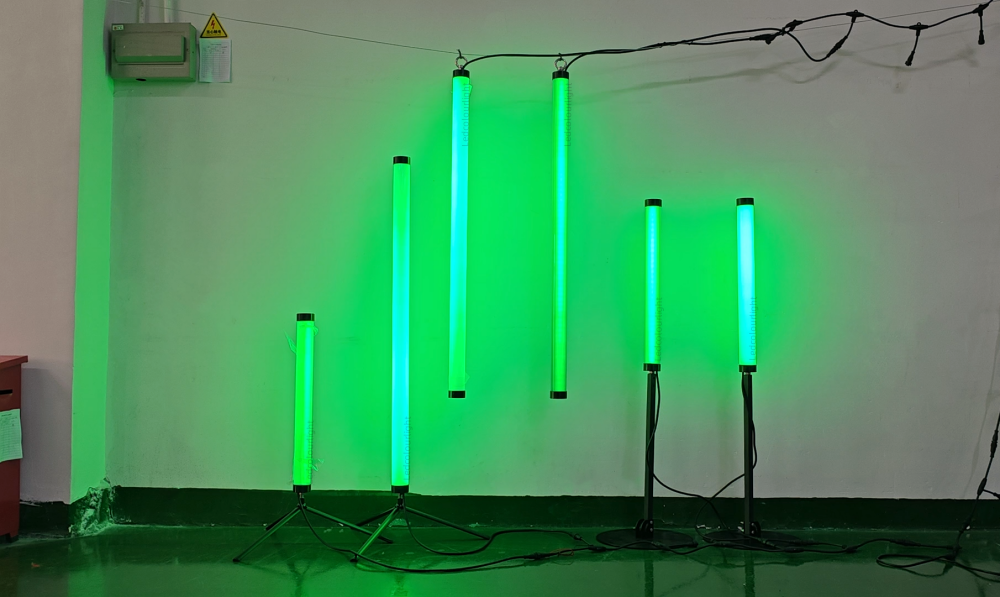
This article explores a versatile 3D LED light tube developed for multi-project use, offering adaptable installation methods and consistent performance for professional lighting environments.
Pixel-controlled 3D LED Light Tube for Professional Lighting Projects