Pixel Lighting FAQ and Technical Solutions
2026-01-19
Common Questions from Clients and How to Solve Them Professionally
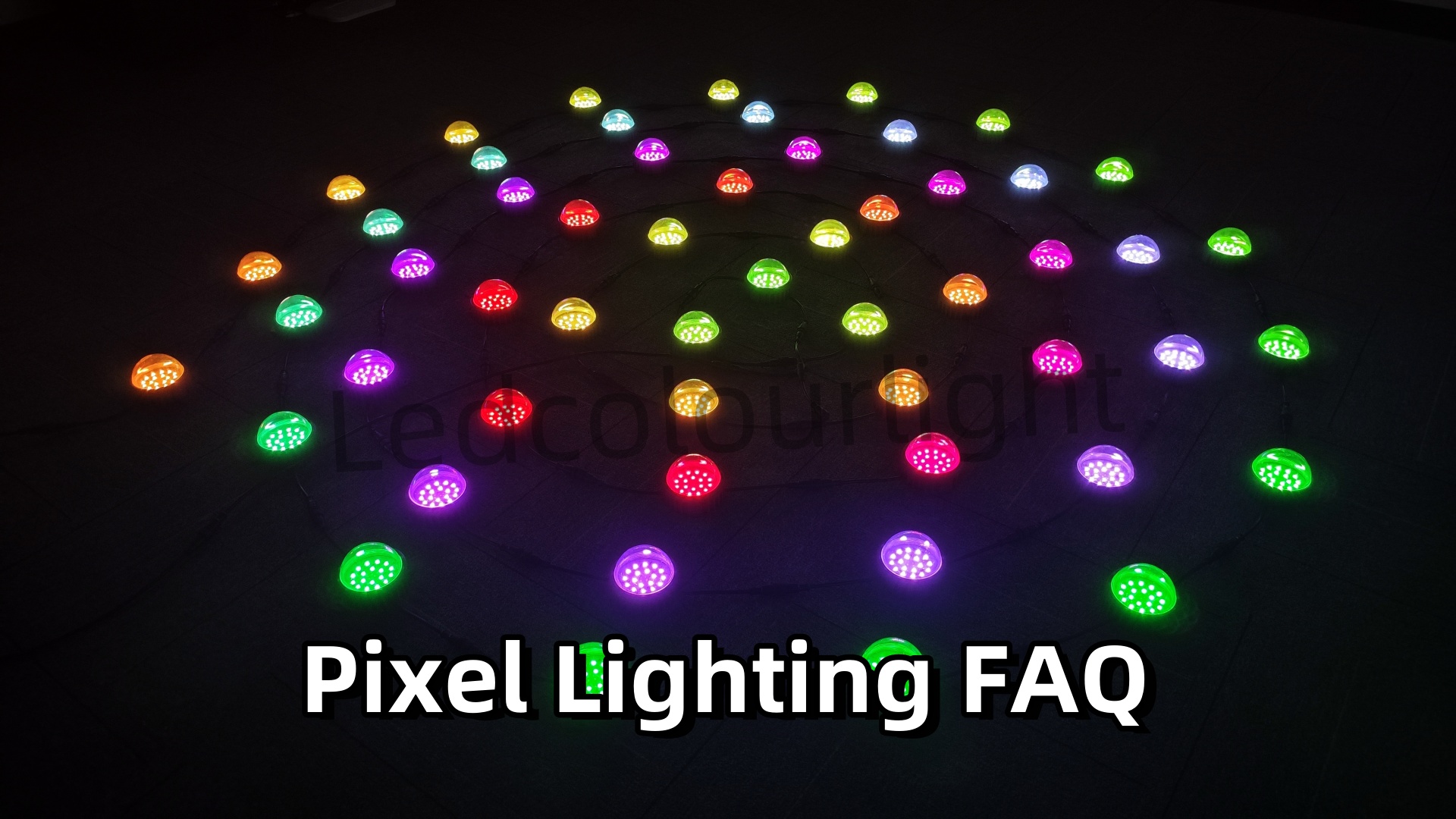
Pixel lighting plays a vital role in modern dynamic lighting solutions, especially in architectural facades, clubs, bars, stages, and immersive environments.
However, due to low-voltage operation and complex control systems, many projects encounter technical challenges during design and installation.
This FAQ-based guide summarizes some common client concerns and provides professional, industry-tested LED lighting solutions to ensure stable performance and long-term reliability.
1. What Should I Do If the Pixel Lights Are Not Bright Enough?
Insufficient brightness is not always caused by the LED quality itself. In many cases, it is related to system design choices.
► Common reasons include:
► Common reasons include:
- Voltage drop along the power line
- Insufficient power supply capacity
- Too many pixels connected to a single power feed
- Incorrect working voltage selection (e.g., DC5V used for long distances)
- Low Pixel density for the application
☑ Professional solutions:
- Optimize power design (proper voltage level, power injection, cable size)
- Increase power supply capacity and keep loading at 85–90%
- Choose DC12V or DC24V systems for better brightness stability
- Increase LED density to achieve higher overall brightness
- Use higher-density pixel lights when uniform and stronger illumination is required
In architectural or entertainment projects, brightness is often achieved by combining proper power design with suitable pixel density, rather than relying on a single factor.
2. How Customizable Are Pixel Lighting Products?
Pixel lighting systems are highly customizable and can be adapted to almost any project.
► Linear Pixel Lights (Strips, Tubes, Bars):
- Custom length, diameter, and housing size
- Adjustable LED density (pixels per meter)
- Colors: RGB / RGBW / RGBWW / Warm White
- Cable exit position, length, and color
- Housing color and custom enclosure design
► Point Pixel Lights (Nodes, Strings)
- Pixel pitch (center-to-center distance)
- Number of pixels per string
- Pixel size, color and shape
► Panel Pixel Lights
- Panel size
- Pixel density
- Custom logo printing or silk screen
Full project-based custom designs are also available when standard products do not meet requirements.
3. How Many Power Supplies and Controllers Do I Need for My Project?
► Controller Capacity (Typical Reference)
DMX512:
RGB: 170 pixels per universe
RGBW: 128 pixels per universe
SPI (like WS2811, UCS1903, or SK6812):
RGB: up to 800 pixels per output (max 1024, recommended ≤80% load)
RGBW: up to 600 pixels per output (max 768, recommended ≤80% load)
► Power Supply Design
- Calculate total wattage of all pixels
- Add 10–15% safty margin
- Power supplies should run at 85–90% load for long-term stability
Proper segmentation of controllers and power zones is essential for large installations, ensuring stable and scalable LED lighting solutions.
4. How Can I Avoid Voltage Drop in Pixel Light Strings?
Voltage drop is unavoidable in low-voltage systems but can be controlled.
Best practices:
- Limit the number of pixels per power feed
- Add power injection at proper intervals (single-end, double-end, or mid-point)
- Choose appropriate cable gauge
- Keep power lines short
- Prefer DC12V or DC24V for long distances
Proper voltage management directly improves brightness consistency.
5. How Is the DMX Address Set? Will It Be Saved After Power Off?
DMX addresses are set using:
- Dedicated DMX writers / address programmers
- Once programmed, addresses are stored in memory and retained after power-off.
- No reprogramming is required when the system is restarted.
6. How Long Can the Extension Cables Be? Can I Have a Customized Cable?
The allowable length of extension cables depends on several technical factors, including working voltage, current load, cable gauge, and signal type (power or control).
For power cables, excessive length may cause voltage drop, so cable length should be designed together with power injection strategy and wire thickness.
For signal cables (DMX or SPI), longer distances can be achieved by using proper cable types, signal repeaters, or amplifiers when required.
For signal cables (DMX or SPI), longer distances can be achieved by using proper cable types, signal repeaters, or amplifiers when required.
At Ledcolourlight, all cables are project-customizable.
This includes:
This includes:
- Power extension cables
- Signal extension cables
- T-type connection cables
Cable lengths are manufactured according to project requirements, ensuring optimized layout, reduced on-site splicing, and improved installation reliability.
Customized cable solutions help maintain system stability while simplifying installation in complex lighting projects.
7. Can Pixel Lights Be Made IP68 Waterproof?
Yes. Pixel lights can be manufactured to meet IP68 waterproof standards, suitable for outdoor and harsh-environment lighting solutions.
- Fully potted IP68 construction
- Waterproof connectors
Before delivery, waterproof testing can be performed according to project requirements to ensure sealing integrity and long-term reliability.
This includes functional testing under powered conditions after sealing.
This includes functional testing under powered conditions after sealing.
8. Are These Lights Programmable and Individually Controllable?
Yes. Pixel lighting systems are fully programmable.
- Each pixel can be individually controlled
- Supports color, brightness, speed, and animation control
- Works with DMX512, SPI, Art-Net, and other protocols
They are fully programmable dynamic lighting solutions, allowing complex dynamic effects and precise visual control.
9. Can Pixel Lights Sync with Music?
Yes. Pixel lighting systems can be synchronized with music using dedicated music control hardware and software-based solutions.
Common music synchronization methods include:
Common music synchronization methods include:
- Music controllers with built-in audio input for real-time sound-to-light effects
- Sound-activated lighting controllers that respond to beat, volume, and frequency
- Lighting control software with audio analysis functions, allowing precise synchronization with rhythm and tempo
- Media servers or lighting consoles integrated with audio signals
These solutions enable pixel lights to react dynamically to music, creating immersive visual effects widely used in clubs, bars, stages, live shows, and entertainment venues.
The synchronization accuracy and effect complexity depend on the controller type and software configuration, allowing flexible selection based on project needs.
The synchronization accuracy and effect complexity depend on the controller type and software configuration, allowing flexible selection based on project needs.
10. Are There App-Controlled or SD Card Playback Options?
Yes. Pixel lighting systems can be operated using mobile App control via WiFi or Bluetooth, as well as SD card controllers for standalone playback. These control options allow lighting effects to run automatically without the need for a permanent PC or on-site computer, making system operation simpler, more stable, and easier to maintain. They are especially suitable for fixed installations where ease of use and reliability are priorities.
11. What Is the Product Lifetime and Maintenance Like?
High-quality pixel lights typically offer:
Long LED lifespan, 50,000hours
Stable performance with proper power design
Maintenance advantages:
Modular replacement
Easy fault isolation
Replaceable power supplies and controllers
12. What After-Sales Support Is Provided?
Ledcolourlight usually offers:
- Warranty (commonly 2 years)
- Technical documentation
- Remote technical support
- Spare parts supply
- Project troubleshooting assistance
Reliable after-sales support is critical for large-scale installations.
Final Thoughts
Professional pixel lighting projects require more than fixtures alone.
By combining proper power design, control architecture, and customization, pixel lighting becomes a reliable and scalable LED lighting solution for complex environments.
By combining proper power design, control architecture, and customization, pixel lighting becomes a reliable and scalable LED lighting solution for complex environments.
About Ledcolourlight
Ledcolourlight provides customized pixel and dynamic lighting solutions, including RGB and RGBW pixel lights, DMX512 and SPI control systems, and full technical support from design to installation. We work closely with designers, engineers, and contractors to ensure every project performs reliably.
✉ CONTACT US for technical consultation, system design, and customized dynamic LED lighting solutions.
Permanent Light Track Systems for Outdoor Applications
2026 RGB Pixel Crystal LED Bulb Series for Creative Lighting Design
Related Article
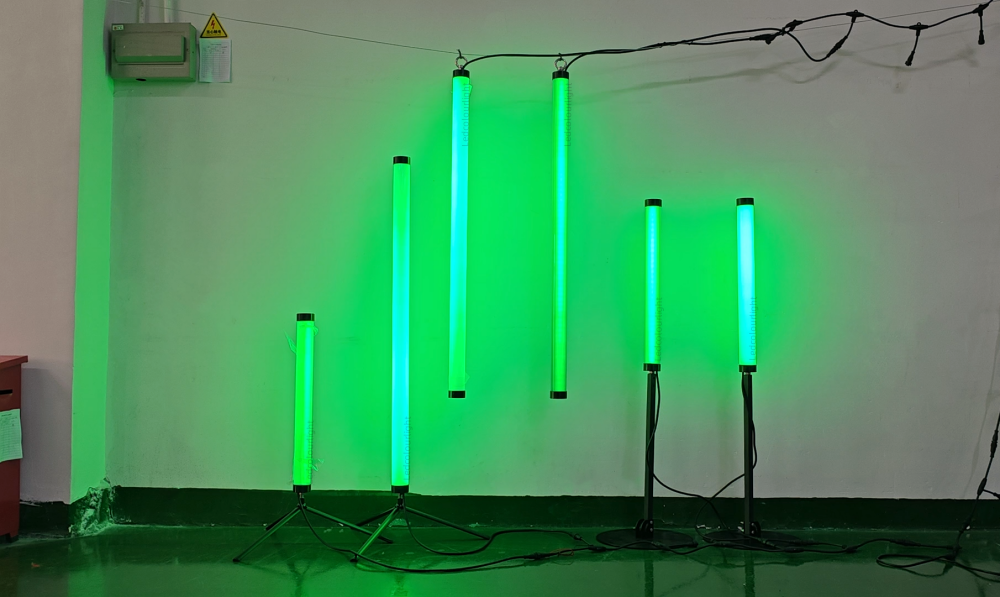
This article explores a versatile 3D LED light tube developed for multi-project use, offering adaptable installation methods and consistent performance for professional lighting environments.
Pixel-controlled 3D LED Light Tube for Professional Lighting Projects