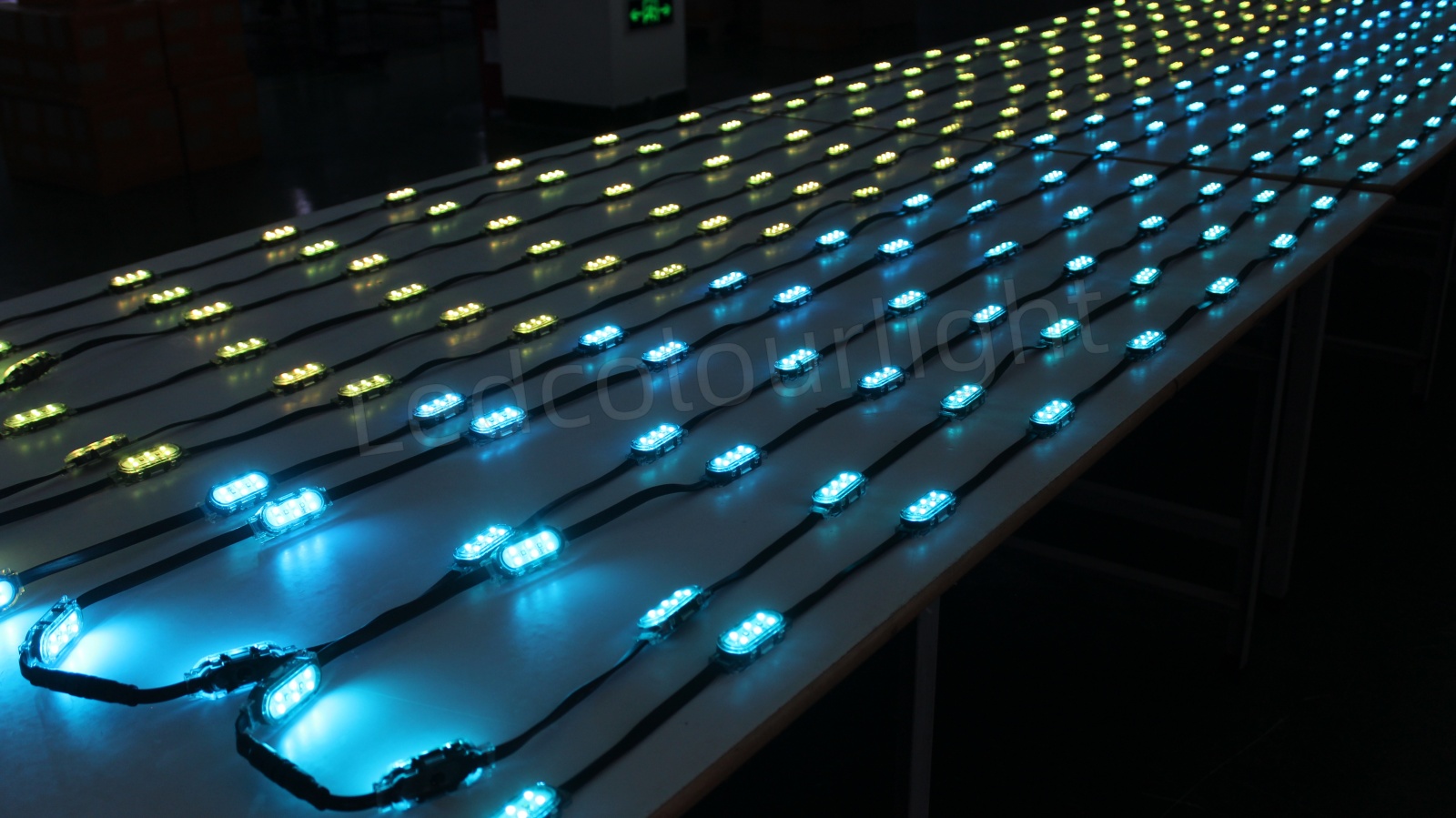
Why LED Mesh Screens Outperform Point Light Strings
2025-08-12
Flexible LED Mesh Screens vs. LED Pixel Point Light Strings: Which is Better for Your Project?
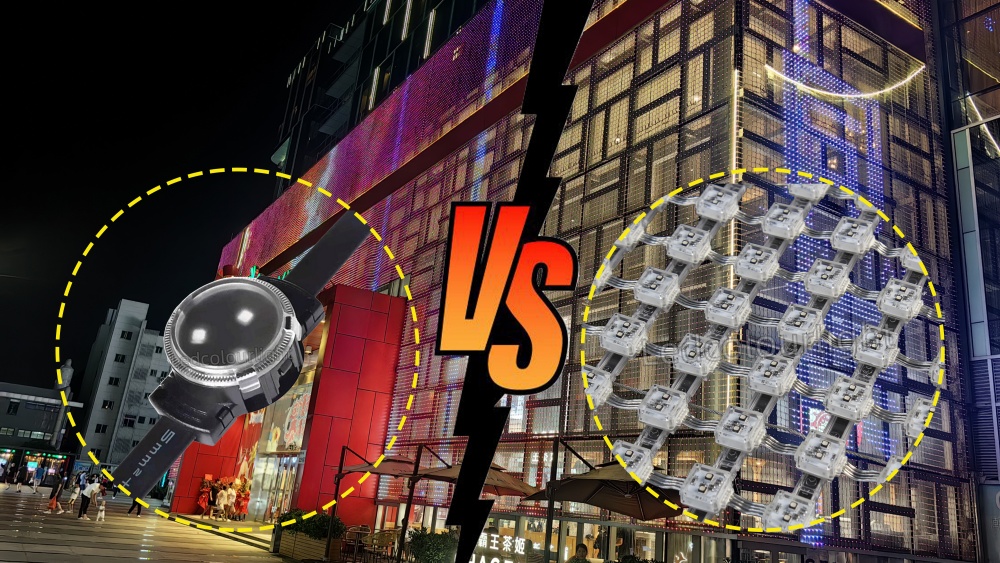
In architectural and stage lighting design, pixel-based LED solutions have become a preferred choice for creating dynamic, programmable lighting effects. Among the most popular are LED pixel light strings and flexible LED mesh screens.
While both use advanced RGB or RGBW LED nodes to produce stunning visual displays, they differ in structure, installation, and performance. In this guide, we'll compare these two solutions and explain why LED mesh screens are the smarter choice for most projects. We'll also answer key customer questions, such as:
◎ What pixel spacing (P50mm, P100mm, etc.) should you choose?
◎ How many LEDs per node (1, 2, 3, 4, or 6) work best?
◎ What's the best power supply (12V vs. 24V)?
◎ Is the material UV-resistant for outdoor use?
◎ Can it be used during the day?
◎ How does the breakpoint resume protocol simplify maintenance?
Let's dive in!
While both use advanced RGB or RGBW LED nodes to produce stunning visual displays, they differ in structure, installation, and performance. In this guide, we'll compare these two solutions and explain why LED mesh screens are the smarter choice for most projects. We'll also answer key customer questions, such as:
◎ What pixel spacing (P50mm, P100mm, etc.) should you choose?
◎ How many LEDs per node (1, 2, 3, 4, or 6) work best?
◎ What's the best power supply (12V vs. 24V)?
◎ Is the material UV-resistant for outdoor use?
◎ Can it be used during the day?
◎ How does the breakpoint resume protocol simplify maintenance?
Let's dive in!
1. Product Overview
1.1 Flat LED Pixel Point Light Strings, 20mm / 30mm size
Flat LED pixel light strings consist of multiple LED nodes connected in series (string form). They can be made with 1 LED, 3 LEDs, or more per pixel, depending on brightness requirements.

◎ Voltage: DC12V (standard)
◎ Configuration: Delivered in strings; center distance between pixels and total string length can be customized.
◎ Housing Color: transparent or black available.
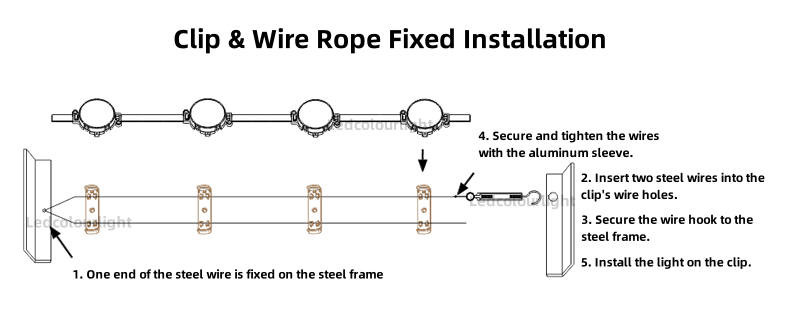
◎ Installation: Typically mounted with clips and stainless steel cables along building facades or structures.
◎ Application: Ideal for outlining buildings, creating linear effects, or forming simple grid patterns.
Advantages:
Flexible in layout — can follow curves and irregular shapes.
Easy to customize spacing.
Cost-effective for smaller-scale or low-resolution effects.
1.2 Flexible LED Mesh Screens, 20mm / 30mm single point size
Pre-assembled Grid-based Design, flexible LED mesh screens are composed of LED pixel modules mounted onto a mesh backing.
◎ Pixel Options: 1 / 2 / 3 / 4 / 6 LEDs per pixel.
◎ Voltage: DC12V or DC24V (better for large installations).
◎ Pixel Pitch Options: P40mm, P50mm, P100mm, P150mm, etc.
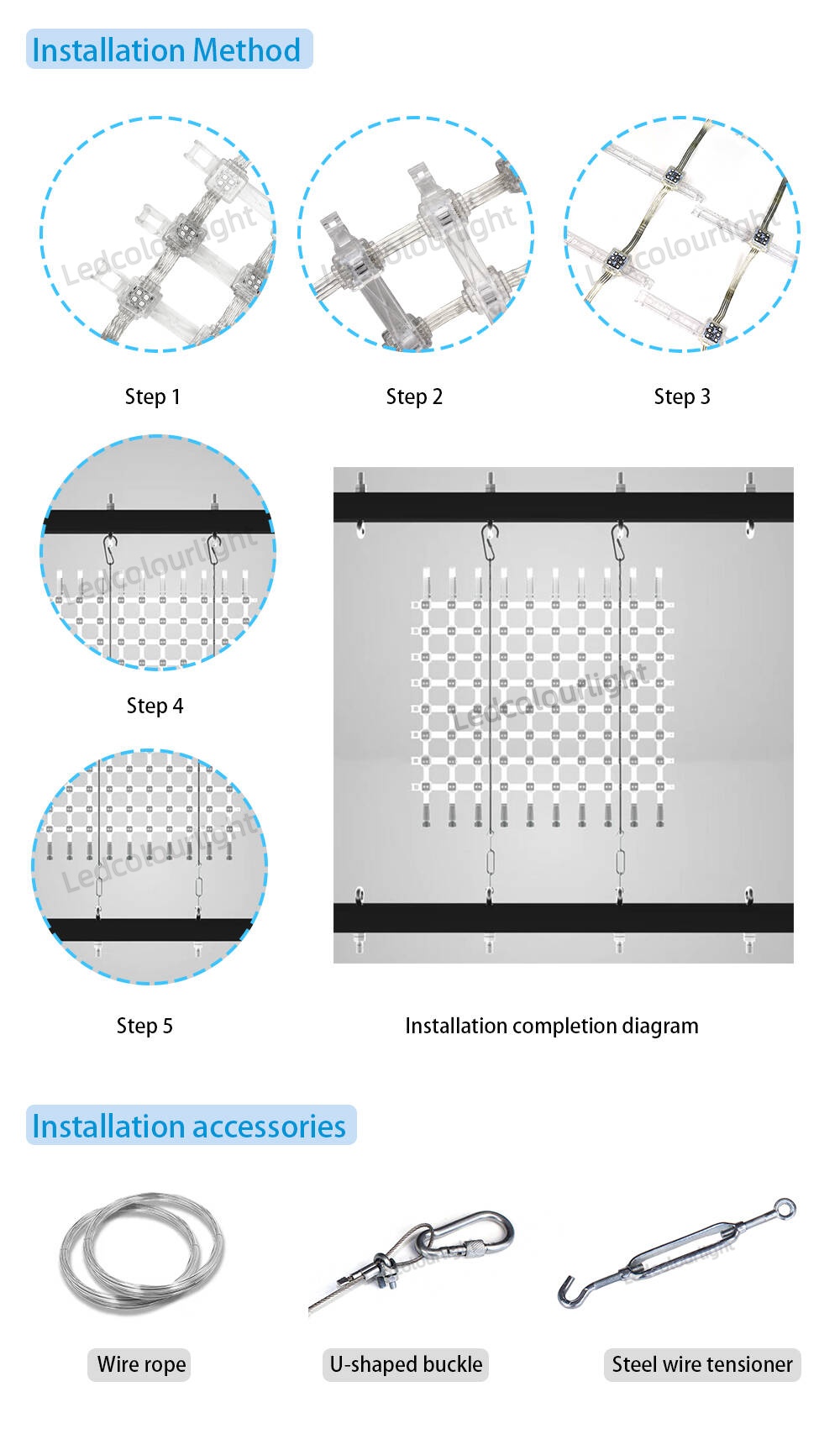
◎ Installation: Pre-mounted on a flexible mesh base, secured with steel wires & hooks for fast deployment (saves 50% labor cost).
◎ Control Protocol: This typically uses resumable transmission, allowing the data signal to bypass a failed LED pixel and keep the remaining lights functioning normally — DMX512 available but at a higher cost.
◎ Color Options: Transparent or black housing for LEDs and matching mesh backing.
Advantages:
◎ Fast installation — pre-assembled grid; reduces labor cost significantly compared to individual pixel mounting.
◎ Breakpoint resume protocol — if one pixel fails, the rest continue working.
◎ High customization — can be made in different pixel pitches and LED counts for varied brightness / resolution.
◎ Lightweight & flexible — suitable for temporary and permanent installations.
◎ Better brightness & visibility - even in daylight.
2. Control Protocols Explained
Breakpoint Resume
The most common choice for flexible LED mesh screen is due to lower cost and reliability. If one node fails, the signal automatically bypasses it and continues to the next, ensuring minimal downtime.
The most common choice for flexible LED mesh screen is due to lower cost and reliability. If one node fails, the signal automatically bypasses it and continues to the next, ensuring minimal downtime.
Advantages:
◎ Lower controller cost than DMX.
◎ Supports long signal runs with correct wiring.
◎ Easy replacement of damaged nodes.
DMX512
Industry standard for professional lighting — great for synchronized shows. More expensive for large-scale mesh because each pixel address consumes DMX channels.
Industry standard for professional lighting — great for synchronized shows. More expensive for large-scale mesh because each pixel address consumes DMX channels.
When to Choose DMX512:
◎ Projects requiring full integration into stage lighting systems.
◎ When precise per-pixel control in professional entertainment settings is needed.
3. Key Product Comparisons
| Feature | Flat LED Pixel Light Strings | Flexible LED Mesh Screens |
| Structure | Individual LED nodes connected in a string | LED nodes mounted on mesh grids |
| Pixel Pitch | Fully customizable (based on cable spacing) | Standard P40, P50, P100, P150, or customized |
| LED Count per Pixel | 1 or 3 LEDs | 1 / 2 / 3 / 4 / 6 LEDs |
| Voltage | DC12V | DC12V / DC24V |
| Installation | Clips + steel cable | Integrated mesh with steel cable, hooks |
| Labor Cost | Higher (install one by one) | Lower (install entire meshs) |
| Control | DMX512 / SPI | Mostly SPI breakpoint resume, DMX optional |
| Housing Color | Transparent or black | Transparent or black for LED and mesh |
| Best Use | Building outlines, curves | Large facades, media displays |
4. Why LED Mesh Screens Outperform Point Light Strings
A. Installation Efficiency
◎ Point Light Strings: Each node must be clipped individually → high labor cost.
◎ LED Mesh Screen: Comes as a pre-wired grid → just hang and secure with hooks.
✅ Best for: Large-scale projects where quick setup is critical.
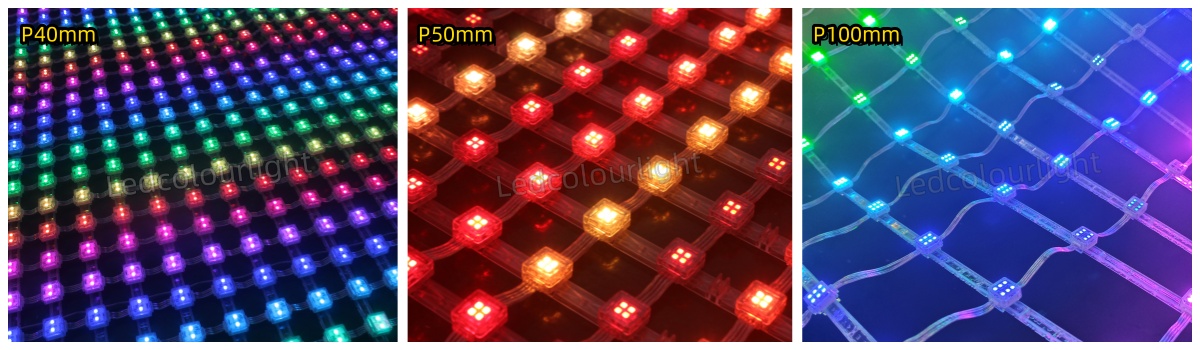
B. Pixel Spacing (P40mm, P50mm, P100mm, P150mm) – Which to Choose?
Pixel pitch directly impacts resolution, brightness, and cost. The optimal pixel spacing depends on viewing distance:
| Pixel Pitch | Best Viewing Distance | Use Case |
|---|---|---|
| P40mm | 4m – 10m | High-resolution media facades |
| P50mm | 5m – 15m | Most architectural projects |
| P100mm | 10m – 30m | Stadiums, large buildings |
| P150mm | 15m – 50m | Long-distance displays |
✰ Recommendation: P50mm is the most versatile for the balance between cost and clarity.
C. LED Count per Pixel — How to Decide?
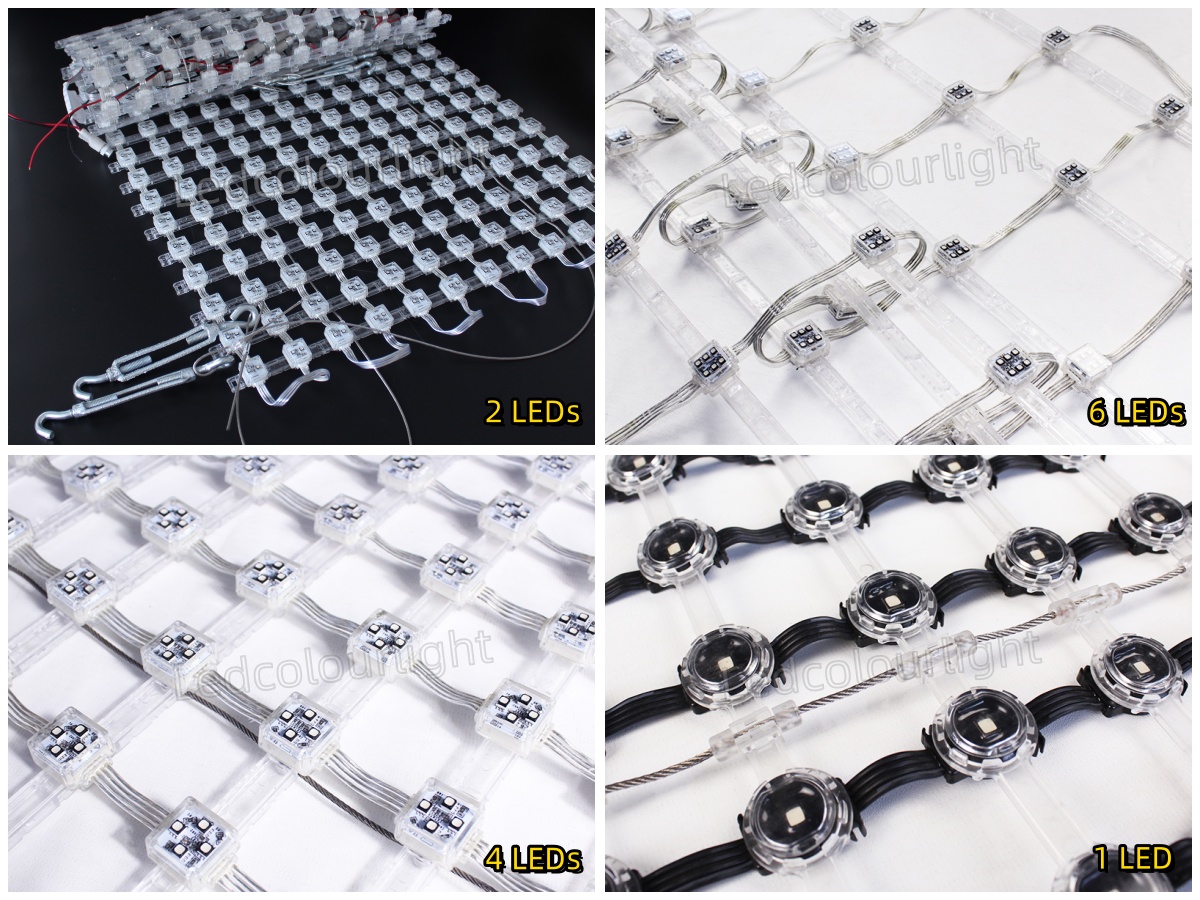
◎ 1 LED / node: Basic lighting, lower brightness, cost-efficient for decorative effects.
◎ 2-3 LEDs / node: Balanced brightness and energy consumption — popular choice.
◎ 4-6 LEDs / node: High-intensity lighting (ideal for high-impact displays or daytime visibility).
✅ Best Choice: 4 LEDs/node (optimal brightness without excessive power consumption).
D. Power Supply: 12V vs. 24V?
◎ 12V: Shorter runs, long runs require careful planning to avoid dimming. Good for small to medium installations.
◎ 24V: Recommended for longer runs to reduce voltage drop, better for large displays. And power can be injected at multiple points for consistent brightness.
✰ Tip: If your flexible led mesh screen is longer than 10m, use 24V for stable performance.
E. Can It Be Used During the Day?
◎ Pixel Point Light Strings: If 1 or 3 LEDs per node, usually not bright enough for daylight, and limited brightness in direct sunlight — best for night-time or shaded environments.
◎ Flexible LED Mesh Facade: High-brightness LEDs with 4–6 chips per pixel can maintain visibility even during the day, though maximum effect is at night.
F. Waterproof & UV Resistance
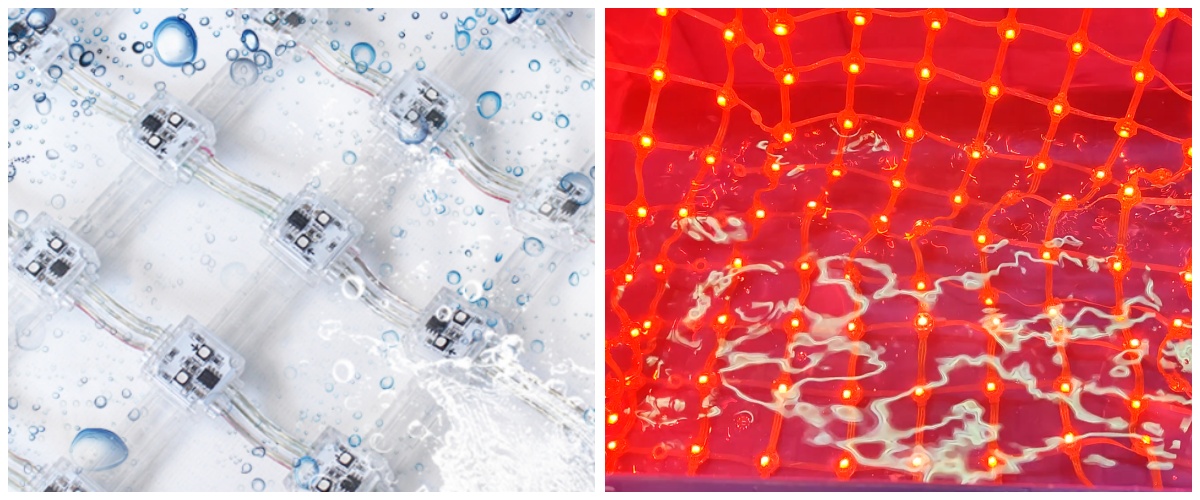
◎ Both products can be made with IP65–IP67 waterproof ratings for outdoor use.
◎ Mesh and pixel housings use UV-resistant, flame-retardant materials — suitable for long-term outdoor exposure without yellowing.
G. Maintenance & Replacement: SPI Breakpoint Resume vs. DMX512
SPI Breakpoint Resume Protocol:
✔ If one LED fails, the rest keep working.
✔ Easy to replace just one node without disassembling the whole panel.
✔ Lower cost than DMX512.
✔ If one LED fails, the rest keep working.
✔ Easy to replace just one node without disassembling the whole panel.
✔ Lower cost than DMX512.
DMX512: More precise control but expensive and complex.
✅ Best for Most Users: SPI protocol (cost-effective & reliable).
H. Housing Color Options
Both pixel strings and mesh can be made with:
◎ Black housing: Disappears against dark backgrounds for a "floating" light effect.
◎ Transparent housing: Allows maximum light output and minimal visual obstruction.
5. Which Should You Choose?
◎ Choose Flat LED Pixel Light Strings if:
- Your design needs irregular shapes or curves.
- You have a smaller budget and longer installation time is acceptable.
◎ Choose Flexible LED Mesh Facade if:
- You want rapid installation and reduced labor costs.
- You're covering large areas with consistent pixel spacing.
- You need better fault tolerance with breakpoint resume technology.
Conclusion
Both 20mm /3 0mm flat LED pixel light strings and flexible LED mesh screens are powerful tools for creating vibrant, programmable lighting effects. However, the flexible LED mesh facade offers higher efficiency, faster installation, and better scalability — making it the go-to choice for large-scale architectural and media facade projects.
If you're planning a project and need guidance on pixel pitch, LED count, control protocols, or installation, our team can provide tailored solutions to match your vision and budget. Contact us today for a free consultation on the best setup for your project!
Silicone-Coated 12V LED WS2811 Strip Series
Durable 40mm RGB Dots Light with IP67 Waterproof Rating
Related Article
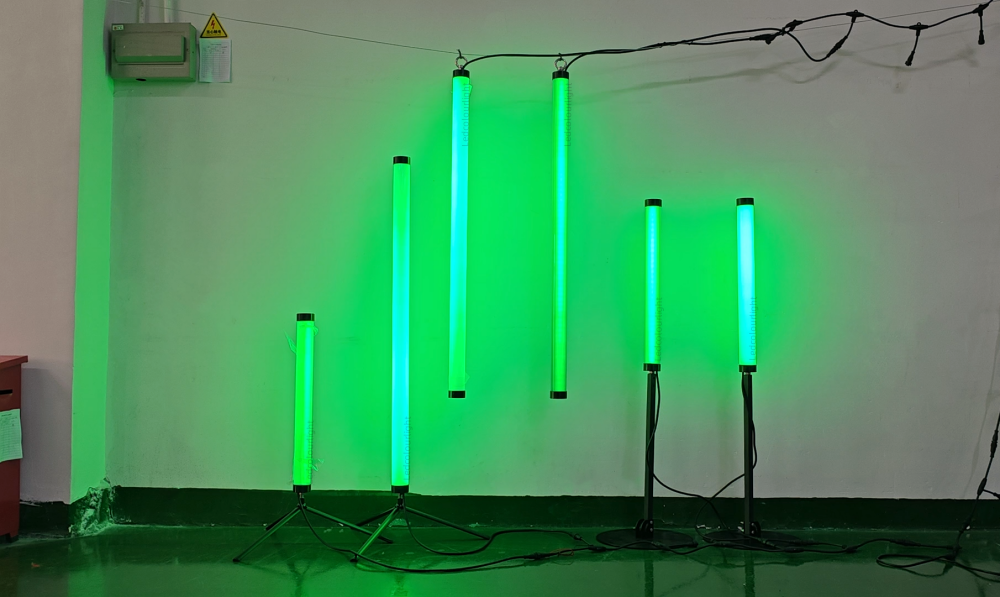
This article explores a versatile 3D LED light tube developed for multi-project use, offering adaptable installation methods and consistent performance for professional lighting environments.
Pixel-controlled 3D LED Light Tube for Professional Lighting Projects